Xander Lang · 23 September 2026
Analyzing Performance Shifts in Data Processing After Infrastructure Updates for Specialized Web Services
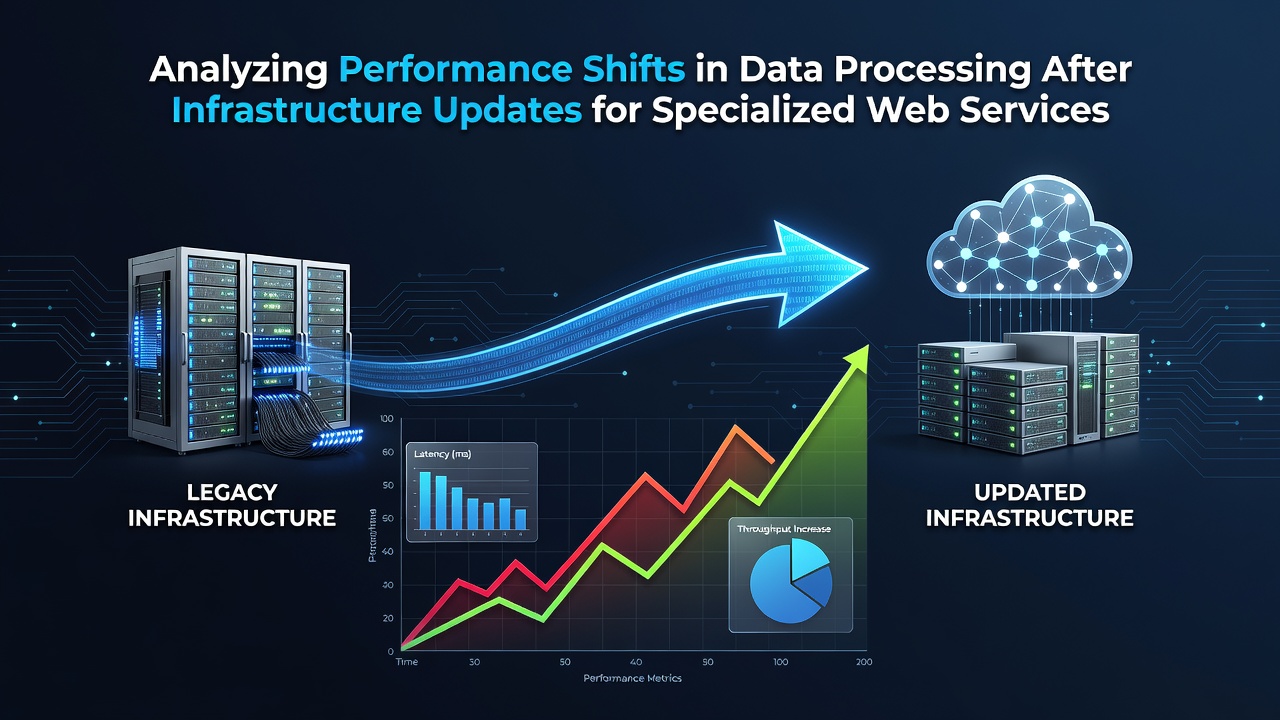
Specialized web services often rely on precise data processing pipelines that shift noticeably once infrastructure updates take hold, and observers track these changes through systematic before-and-after comparisons that capture latency reductions alongside throughput gains. Researchers at various institutions have documented how migrations to newer server architectures or cloud orchestration layers alter query execution paths, while data from monitoring tools reveal patterns in resource allocation that emerge within weeks of deployment.
Methods for Tracking Performance Changes
Teams typically establish baseline measurements using standardized benchmarks such as transaction per second counts and average response durations before any updates begin, then repeat the same tests on the revised setup to isolate variables introduced by hardware refreshes or software stack revisions. According to guidelines from the National Institute of Standards and Technology, consistent logging of CPU cycles, memory bandwidth, and disk I/O operations allows analysts to quantify shifts without introducing confounding factors from uneven test conditions. Experts apply statistical models that account for seasonal traffic variations, and this approach yields reliable deltas even when workloads fluctuate across different geographic regions.
Key Metrics That Reveal Infrastructure Impact
Throughput rates frequently climb after updates to high-speed networking fabrics or optimized container runtimes, whereas latency distributions tighten because newer processors handle parallel data streams with fewer context switches. Studies from academic groups in Canada and Australia show that specialized services handling real-time analytics experience measurable drops in tail latencies once solid-state storage arrays replace older mechanical drives, and these improvements compound when paired with updated database indexing strategies. Observers note that error rates in data validation steps sometimes decline as well because firmware enhancements reduce bit-flip occurrences during high-volume transfers.
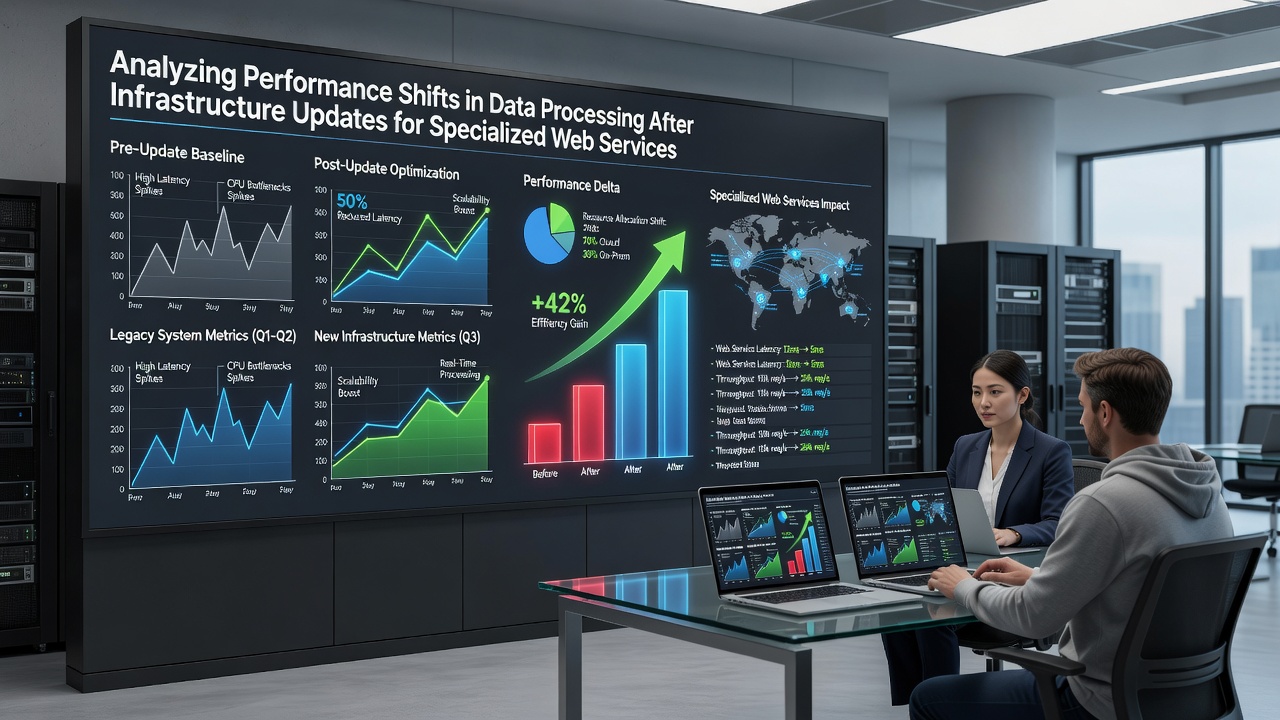
Resource utilization graphs often display more even load balancing across nodes after orchestration platforms receive patches, and this redistribution prevents localized bottlenecks that previously throttled overall system capacity. Data collected through September 2026 from multiple enterprise deployments indicates sustained gains in efficiency when updates include automated scaling policies tuned to historical usage curves.
Effects on Specialized Service Categories
Financial data feeds and scientific simulation platforms demonstrate pronounced sensitivity to network jitter reductions that follow upgrades to low-latency interconnects, while content delivery networks see faster cache hit ratios once edge servers incorporate newer compression algorithms. Researchers have observed that machine learning inference endpoints process batch requests more rapidly after GPU cluster expansions, and these accelerations translate directly into higher query volumes without proportional increases in power consumption. European reports on digital infrastructure highlight similar patterns in healthcare record systems where compliance logging overhead decreases following streamlined encryption modules introduced during routine updates.
Long-Term Monitoring and Adjustment Practices
Continuous telemetry collection remains essential because initial gains can erode if configuration drift occurs or if downstream dependencies lag behind the core infrastructure refresh. Analysts compare rolling averages across multi-month windows to distinguish transient spikes from durable improvements, and they adjust alerting thresholds accordingly to catch regressions early. Industry organizations such as the IEEE have compiled case repositories that illustrate how iterative tuning after an update phase sustains performance advantages across diverse service types.
Integration testing suites run in staging environments replicate production traffic patterns, allowing teams to forecast shifts before full rollout and to validate that specialized processing logic continues to meet accuracy requirements post-migration. This preparatory step reduces the risk of unexpected degradation when live data volumes resume.
Conclusion
Performance shifts following infrastructure updates manifest across multiple measurable dimensions that collectively determine service reliability and capacity for specialized web applications. Systematic analysis grounded in repeated benchmark cycles and detailed metric tracking provides the factual basis for confirming whether intended optimizations have materialized. Continued observation through established monitoring frameworks ensures that gains identified in initial evaluations persist as operational demands evolve.